Showing posts with label Treasures. Show all posts

21 May 2014

An elegant little worm


Wild-type C. elegans hermaphrodite
 stained with a fluorescent dye
Caenorhabditis elegans, despite its long name, isn’t a creature you’d take much notice of. It’s only one milimetre long and lives in the soil, feeding on bacteria. It’s a transparent worm-like creature* that has neither lungs nor heart. Most of the species are hermaphrodite, having both female and male characteristics.

One of the things that makes C. elgans interesting to researchers is that it has a wonderfully uncomplicated nervous system, only 302 neurons in total. (Compare this to the 100,000 neurons of a fruit fly, or the 1 million neurons of a cockroach, or the billions of neurons in mammals.) The function of its whole neural network has been mapped. This makes it fairly easy to study and use in experiments.

It also has relatively few cells, and a genetic make up that is simple enough to have made C. elegans the first multi-cellular organism (after single-celled bacteria) to have it’s genome mapped.

To add to its charms, C. elegans is cheap and easy to look after, harmless to people, has a very short reproduction time and can even be frozen and thawed without coming to any harm.

Despite it’s tiny size and apparent simplicity, C. elegans can be used to study various aspects of aging and cell death, addictions, sleep and muscle function. It has also been used on the space station to research the effects of zero gravity.

C. elegans is an example of the inter-relatedness of all living things, both in its structure and in its role in the ecology of the soil. It is also incredibly useful to scientists trying to understand more complex organisms. To me, this little worm demonstrates that behind evolution is not only a creator, but a creator who is benevolent, who provides all that we need to investigate and understand the creation. He has left the construction manual open for us to read, if we will.

Images from wikipedia: Caenorhabditis elegans
*Strictly speaking C. elegans is a nematode.

16 May 2014

Burial Rites - a late-comer's review

(Friday files)


Burial Rites, by Hannah Kent, is being hailed as a ‘great first novel’. But that suggests that the book has a rawness that needs to be excused due the author’s lack of experience. Not so, this is simply a great novel, one that would make most aspiring writers say “I wish I could write like that”, and not just because of the unusual success that Hannah Kent has had with her first book.

Not many first-time authors would attempt a story set in Iceland in the early 19th century. Imagine the research required! Hannah Kent, who is from Adelaide, did indeed spend time in Iceland doing the research to make the book as realistic and accurate as possible. Without ever labouring the details, she sets the scene so that we can feel the icy winds, smell the cramped and decaying farmhouse and experience the social interactions of a small and impoverished rural community.

Agnes Magnusdottir, the main character, has been condemned to death for a brutal murder. While the authorities are deciding where and how her execution is to take place, she is sent to stay with a minor official, a farmer and his family, since Iceland, under the rule of Denmark, has no suitable prison.

Her story is gradually revealed as she interacts with the family, their neighbours and especially with Toti, the young priest who has been assigned to ensure that she goes to her death repentant. Hannah Kent skilfully builds the tension as we’re left wondering, almost to the end of the story, whether Agnes was in fact guilty of the murder.

All of the major characters are changed in some way by Agnes' presence in their lives, and this too is achieved, for the most part, through subtle writing. One of the criticisms levelled at the book by some is that there is too much repetition of images and symbols such as ravens and stones. Apart from wishing that Margaret, the farmers wife, wouldn't cough every time she appeared, I didn't find this a problem.


However, knowing that one of the main characters was a priest, I came to the novel with some trepidation, wondering whether this would be yet another story that mocked religion. Some of the characters are, indeed, narrow-minded and cruel legalists despite their claims to be Christian - just as are many who claim to be Christian in the real world. Agnes herself has long since lost her faith as a result of her experiences. But Toti’s faith, while somewhat naive because of his age, is never mocked. It would be revealing too much of the story to say more, but sacrifice is one of the themes that runs through the book, along with questions about what is truth.

I hope that Hannah Kent will not be overwhelmed by the response to her first novel and will continue to write unencumbered by expectations.


14 May 2014

Time lapse videos

Most of us don’t have the time to sit and watch changing cloud formations. We notice flowers opening, seeds sprouting, and fruit ripening as a series of disconnected observations. Yesterday the flower was in bud, today it is open, tomorrow the petals have begun to fall.

Time lapse photography allows us to see such events as a continuous process. Multiple, frequent images of the same object or place are run together to form a video that speeds up the action. Now we can see the flower blossom, open and fall over a matter of minutes, as in this video by Neil Bromhall.


While modern equipment makes the process easier than it used to be, time lapse photography clearly still takes a lot of skill. Placing the object, managing the lighting, setting up the camera and processing the result all have to be done correctly to produce a good result. Video-sharing sites like Youtube and Vimeo have many wonderful examples.

Some photographers, however, go a step beyond the rest and add something which make their videos works of art rather than simple demonstrations of technical skill.

So Youtube has many videos of fruit gradually wizening and decaying. But James Knott reversed his sequence of a tomato shrivelling and produced a video that shows a shrivelled, moldy tomato gradually filling out and becoming whole. It’s intriguing.


Similarly, many people have used time lapse photography to film the process of their pregnancy. Most are well done. But this one by Armands Alps adds a story line and a touch of humour that makes me smile.


22 November 2013

Prayer and the cello player

(Friday files)

Last Saturday evening we went to the concert hall and heard Sol Gabetta and the West Australian Symphony orchestra play Dvorak's wonderful Cello Concerto in B minor. The Argentinian cellist's poppy-red gown and animated playing made it a visual as well as an auditory treat.

After the Dvorak, Sol Gabetta played a wistful piece as an encore, accompanied by the orchestra's cellists. It took me a while to find out what it was, since it wasn't on the programme and wasn't announced. Searching for "Sol Gabetta" and "encore" eventually led me to this piece by Ernst Bloch, called Prayer, one of three pieces "From Jewish Life". It was written in 1924 and was originally scored for cello and piano.

This version is played by Antonio Lysy.


25 October 2013

Breath by Tim Winton

(Friday files)

My first exposure to Tim Winton's novels came in the late 1990's. The holiday cottage where we were staying had a small collection of books, one of which was "The Riders". I began reading about ten o'clock in the morning and continued reading until I finished the book about two o'clock the next morning. I can't remember whether or not I cooked dinner for my family or even spoke to them during that day.

Since then I've read several of his books (though strangely I've never read Cloud Street which is the one which most people know). In all of his novels, places are described in a way that is sparing of words, yet highly evocative. In an interview Tim Winton once said "The place comes first", and no other novelist I know writes about places the way he does. 

In Breath, published in 2008, ocean swells and rock formations off the southern coast not only have names, but become protagonists in the plot. The setting is a small timber-cutting town named Sawyer, it's neighbouring port town of Angelus, and the rugged coast in between, sometime in the 1970's. Anyone who has spent time on the south coast of Western Australia would have no difficulty in recognising these locations. For me, it was like revisiting the landscapes and social terrain of my teenage years. But Winton doesn't describe places so much as bring them to life as characters in his story. Angelus and Sawyer each have their own personality which plays a role in events.

Breath is, at one level, a coming-of-age story. Written in the first person, it describes Bruce Pike, "Pikelet", an only child, who manages to evade his parents' fears and restrictions as he learns to surf with his wild companion Loonie. In the process he encounters adults who introduce him to a very different world from that of his upbringing, and faces challenges and risks that he is not always prepared for. 

Yet it's not just a coming-of-age story. We first meet Pike as an adult, when he is working as a paramedic. And while the events of his teenage years form the bulk of the plot, we get to follow Pike well beyond young adulthood, as the choices he makes in his teens play out in his later life. My only disappointment with the book was that these later years are condensed into just a few pages. It was as if Winton had barely outlined the plots of several novels to come. I hope so.

As the title suggests Breath is a story in which breathing - learning to control one's own body, and pushing it to its limits - is a key theme. It's also about the suffocating effects of small town life, family and relationships. In some way, every character struggles with breathing, literally or figuratively, at some point. 

It's a story in which many of the characters seek to find meaning in life by pushing themselves to the point of losing life altogether. They are only one lungful of water, one gasp of air, away from death. Surfing plays a large part in the plot, and the techniques and landscapes and exhilaration of surfing are described in fascinating detail, yet never in a way that merely provides information to impress. It's not a macho adventure story. Macho adventurers seldom struggle with philosophy as this book does.

Winton's characters are, at one level, very ordinary people doing the things that ordinary people do, including getting into bed with  each other. At another level Winton manages to show that there are no ordinary, unremarkable people. The people we barely notice in the street all have complex and sometimes painful stories, which they are struggling to make sense of. If you want to read about nice or noble people, Breath is not for you. If you want a great read, one that opens your eyes to a world that isn't mainstream or neatly packaged, I recommend it.


3 July 2013

Anatomical wonders

“When you think about it, the human heart is amazing” said a friend of mine recently. “It goes on pumping seventy times a minute for the whole of your life, all on its own.” And I had to agree, it is pretty amazing. What other machine keeps on going, day in, day out, for seventy or eighty years? A little maintenance in the form of diet and exercise helps, and sometimes things go wrong and it fails, but most of us can rely on our hearts to keep beating for many decades without any thought on our part.

The whole human body is amazing. The laptop I'm writing on is eight years old. It has definite signs of senility. I keep it because I like the keyboard, and it functions reasonably well as a word-processor. But there’s a good chance this laptop will suddenly stop working some day soon, and it’s unlikely that I’ll be able to repair it. In comparison, three out of four eighty-year-olds have brains that continue to function well. The wonder is not that some people develop dementia, but that so many people avoid it.

My decision to study medicine at university was made partly as a result of reading a book about human anatomy. What I read about the complexity and intricacy of the human body and it’s ability to regulate and repair itself was awesome and I wanted to know more. It still fascinates me.

Genetics, circumstances and poor choices can all have a detrimental effect on our health. Nevertheless, the psalmist was right when he praised God that he was “fearfully and wonderfully made” (Psalm 139.14). This TED video could well be used as a reflection on the previous verse – “You knit me together in my mother’s womb”. (If you can't see the video here, this link should take you there).


26 June 2013

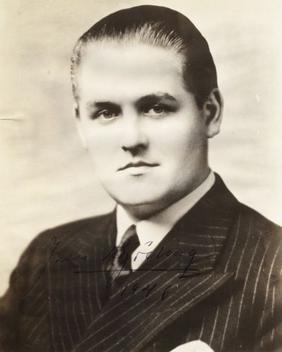
Jussi Bjorling


I've mentioned the Swedish tenor Jussi Bjorling (1911-1960) before as one of the all-time great singers. Apparently he wasn't the greatest of actors, but no-one cared when they heard him sing. Sadly, he suffered from the ill effects of alcoholism and he died at an early age of heart disease.
The soprano Victoria de los Angeles told her biographer "In despite of technical developments, none of the Jussi Björling recordings give you the true sound of his voice. It was a far, far more beautiful voice than you can hear on the recordings he left". 
Unfortunately we only have the recordings to listen to. This is one of my favourite, the duet "Au Fond du Temple Saint" from Bizet's The Pearl Fishers, act 1, sung by Robert Merrill and Jussi Bjorling.


31 May 2013

The Orrido di Sant'Anna

(Friday files)

This little bridge was built across the Sant'Anna gorge above Cannobio, in northern Italy, in medieval times. By peering over the edge of the more modern road bridge alongside it, you can get a giddying glimpse of the Cannobino river 25 metres below, as it plunges through the gorge (the 'Orrido') to reach Lake Maggiore.


Nearby is the church of Sant'Anna, built in 1683. We came across them unexpectedly when we went for a stroll (a brisk stroll - we had our long-legged daughter with us) along the river from Cannobio. Italy seems to be full of such marvels.

9 April 2013

Missing the mystery


"The most beautiful thing we can experience is the mysterious. It is the source of all true art and all science. He to whom this emotion is a stranger, who can no longer pause to wonder and stand rapt in awe, is as good as dead: his eyes are closed." - Albert Einstein


I think there's a misperception out there that artists are in touch with the sense of mystery, beauty and awe, but scientists are only interested in 'hard facts' and the mathematics that describe them.

Perhaps the misperception is partly due to the way some scientists talk as though explaining how something works reduces it to the entirely comprehensible and mundane. We can describe the inner structure and workings of the atom, so what else is there to explain? It's no longer a mystery.

Yet the very existence of the atom is itself a mystery. That such complexity occurs at such a minute level is awe-inspiring. That human beings have, over the centuries, found ways to discover so much about the atom is also awesome.

In some ways it's easier to see how scientists, rather than artists, could find themselves 'standing rapt in awe'. I've heard mathematicians talk excitedly about 'beautiful equations' without any hint of sarcasm. Surely Einstein was right about the mysterious being the source of  all science.

But was he right about it inspiring all art? What does he mean by 'true art'? For Einstein, true art comes from a beautiful experience related to a mystery that arouses awe and wonder. By that definition, the 'art' that I saw at MoMA in Hobart last year – pictures of mutilated bodies, twisted metal, rows of plaster casts of the female vulva - was not 'true art'. If anything, the exhibits seemed to arise more from the shock of revulsion and horror than the beauty of mystery. There was a mystery involved in some of the works but it could hardly be described as a beautiful experience, for the artist or the viewer.

But at least the artists were still sensitive to what they were seeing. More worrying are those who meet Einstein's description of people who are as good as dead, who experience no sense of awe in the face of all that surrounds them. The evening news, the night sky and a forest walk leave them equally unmoved. They have no curiosity about the workings of an ant colony, or the way in which a baby becomes a walking, talking child. A new gadget or technology might momentarily inspire some curiosity and awe, but it quickly becomes passe.

I read an article recently about this phenomenon - gadgets that perform feats that once would have staggered us rapidly become part of our normal, unnoticed life and we only complain of what they fail to do. I must admit to having fallen into this trap myself. My sense of awe and wonder is badly out of practice. I take so much for granted. Here I am writing on a laptop-sized computer, using a web-based 'paper' whose characteristics I can change on a whim, with music streaming from a site thousands of miles away, and I'm not even noticing it. None of these things would have been possible when I was a child, or even twenty years ago.

Perhaps part of the problem is not leaving enough time in each day to notice what is around me or think about what I'm seeing, hearing and reading. It's very easy to flit from one activity to another. With so much available, the risk of 'missing' something makes it very tempting to consume without thinking or really experiencing any of it.

Einstein spoke about pausing and standing. Surely that's integral to experiencing the beauty of mystery. In my own experience, those awe-inspiring moments often come after looking at something for a while without really seeing. I must have looked at the garden every day for years before I consciously noticed how amazingly different every plant is. The Grand Canyon might produce an instant "wow!" effect, but the furrows in the bark of a tree or the creases in an older person's face are also mysterious and beautiful, once you take time to really look at them.

3 April 2013

Balance


Tobias Hutzler - BALANCE from Tobias Hutzler on Vimeo.

I found this clip fascinating. The technical and artistic skills of the performer are matched by those of the producers to create something that's quite abstract and beautiful, and despite the tension of the balancing act, soothing to watch.

27 March 2013

Music on the brain

Most western classical music is based on the heptatonic scale, ie the 7 note octave of “do-re-mi-fa so-la-ti-(do’) ”. But popular music, from nursery rhymes to Negro spirituals, is often based on a five note octave, or pentatonic scale. So are many forms of folk music, from Indonesian gamelan to Andean music. In fact, according to the Wikipedia article where I found this information, composers of film scores often use the pentatonic scale when they want the music to indicate “primitive or exotic contexts”.

In this 3 minute video (filmed at the World Science Festival several years ago), musician Bobby McFerrin has some fun demonstrating the apparently universal nature of the pentatonic scale. As he says at the end of the clip, no matter where in the world he goes, audiences ‘get’ it. It’s as though our brains are wired that way. Or perhaps we’re just all in tune with Bobby McFerrin.

15 March 2013

Virtual tours and virtual art

(Friday files)
In the past if you wanted to see a particular work of art, you’d have to travel to the gallery where it was displayed. That meant having enough money and free time to travel. Gradually, as printing techniques improved, it became possible to see reproductions of works of art in books, but they were still relatively expensive.
Now you can go on a virtual tour of most of the world’s great art galleries – the Louvre in Paris, the National Gallery in London, or the Uffizi in Florence for instance. The Google Art Project has dozens more, including several Australian galleries.
But what isn’t apparent from looking at works of art in books or online (apart from their real size) is the variation in colour of the reproductions. Even the originals vary in apparent colour depending on the lighting used, but the reproductions can be quite different in hue to the originals and to each other.
In an interesting play on this, Fernanda Viégas and Martin Wattenberg have created collages made up of tiles taken from multiple online versions of the same work of art. Some use multiple copies of one small fragment of a picture to create a new artwork, others reproduce the entire image. Here, for instance, is Botticelli’s “The Birth of Venus”. (This is just a thumbnail – click on the link or the picture itself to go to the HintFm website.) It’s well worth a look.
17-births-of-venus_tiny (1)

6 March 2013

A treasure trove of Bach’s organ music


The Internet seems to foster a spirit of generosity. So many people offer products and services for free. I'm not talking about ‘free’ as in paid for by advertisements, or ‘free’ as in try a sample then pay for the real thing, or ‘free’ as in plagiarised. I mean ‘free’ as in donated by people who genuinely want to share their work with others without charge or conditions.

Think, for instance, of the many hours spent by countless volunteers to produce the free e-books at Project Gutenberg. Or think of the wide variety of podcasts and videos made available online with original content. Or what about the programmers who offer their software creations for free through hundreds of freeware sites.

Musicians especially seem to be a generous bunch. I recently came across a site offering recordings of every Bach organ work for listening online or free download. The works are played by Dr James Kibbie, Professor of Organ at the Michigan State University and an internationally renowned authority on Bach’s organ works. 

The pieces (270 in total) were recorded between 2007 and 2009 on original German baroque organs. You can listen online (left click), download a single piece (right click), or take a zipped file containing grouped pieces. The site has instructions on how to do this, or I’d be happy to help.

People either love or hate organ music, depending, I suspect, on their experiences while being in the places where organs are played. If you’re one of those who love it, here’s a sample: the allegro (3rd) movement from Sonata 1 in Es/Trio Sonata 1 in E flat major, BWV 525 played on the 1755 Gottfried Silbermann/Zacharias Hildebrandt organ, Kathedrale, Dresden, Germany (Photo above courtesy of Timo Sack, 2006)


1 March 2013

Letter art

(Friday files)

The idea of using letters and text to create art has always fascinated me. It seems to blur the demarcation between letters as sounds with meaning and letters as shapes with aesthetic value.

In the Islamic world, the importance of the written word, the fluidity of the Arabic script, and caution about depicting images that might be seen as idolatrous has led to an incredible variety and abundance of beautiful calligraphy.

At one stage I dabbled with calligraphy but I didn't have the patience to master it well enough to create anything longer than a birthday card greeting. What I produced was smudgy and irregular. Now, of course, I can use the computer to produce perfect 'calligraphy' and manipulate the layout interminably without ever getting ink on my fingers or clothes. A number of web sites offer free 'word art' and word cloud creation apps, so you don't even need to install any software.

Tagxedo is one such site. Just click on 'load', (or the 'Create' button if you're on the home page) add some text, or a link to a page of text, and then play around with the various options for shapes, colours and fonts. The possibilities are endless - have a look at the examples on the site. (It's free and no sign up is required - but you will need the Silverlight plug-in installed on your browser). Here are a couple of images that I created very quickly from yesterday's blog post.


15 February 2013

Frabjous Friday

 (Friday files)

Frivolous, fribbling, frabjous Friday – POETS day, for those who work the whole week, a free day for me. It’s a day for pottering around the house and catching up with friends. Don’t expect anything too serious here on a Friday, but do expect anything and everything.

Here’s one of my favourite photos from my trip to Florence in April 2011. It’s not the greatest shot, but it brings back lots of happy memories of narrow streets full of people and motorbikes, good Italian food and the slightly fusty smell of an old-world city on a warm day. One of these two musicians had been playing (busking really) in the piazza where I’d just had lunch.

DSCN0935_cr

13 February 2013

Lisa Lan

As a child I learned the folk song 'Lisa Lan' in English, and with simplified English lyrics at that. Now I've found a lovely version sung in it's original Welsh by Katherine Jenkins.

I'm not sure why the scenery in the video is from Ireland, but it doesn't detract from the music. If you're interested in the words and their translation, they can be found here.

25 February 2012

How do you like your Vivaldi served?

Sometimes I discover a piece of music and wonder how I could have spent my whole life without hearing it before. Take, for example, this piece by Vivaldi, "Cum Dederit", from his setting of Psalm 127 (Nisi dominus, RV 608) sung here by counter tenor Bruno Le Levreur*:


I'm also sometimes surprised at how different the a piece of music can sound when conducted by different people. Here's another version of the same piece, conducted and sung by Polish conductor and counter-tenor Jakub Bryzinski:

Which do you prefer? (More on the words later).

  *Note: I originally had a clip of Carlos Mena singing the same piece, but it seems to have been taken down from YouTube. You could try searching for it. Also check out Sara Mingardo singing the same piece - all so different, all lovely.

29 January 2011

Two books, two stories

After reading very little for the past few months, I'm now slowly reading two hefty books at the same time. The first is an ancient classic, Homer's Iliad (in English translation). For centuries, apparently, it was standard reading for school boys learning classical Greek, and they had to read it in the original Greek. (Girls, if they learned to read at all, read more gentle books in modern languages.) Now it's one of those books that is often referred to but seldom read. I can't remember when we bought a copy, but for years it has been serving as a useful book end on our bookshelf. (The equally hefty and unread Odyssey has propped up the other end.)

I've found reading the Iliad both stirring and frustrating. Stirring because of the beauty of the language and the fast pace of the story. Frustrating, not because it's written as a long poem rather than as prose, nor because the handful of women mentioned in it seem little more than loot to be battled over by the men,  nor even because it is graphically violent a lot of the time. No, it's frustrating because I'm used to the modern western novel, in which the characters are expected to make things happen by their own ingenuity, strength or virtue. 

It seems as though the decisions and actions of the characters in the Iliad are being constantly undermined and thwarted by the gods, who have their own little conflict going on. No matter how heroic or intelligent a man might be, if Zeus or Hera or some other god or goddess decides to favour his opponent, he'll fail. It seems quite acceptable for an opponent to be suddenly and mysteriously whisked off the battle field by a goddess just as he is about to be killed, or for a spear thrust that should have been lethal to glance off the opponents armour at the whim of one of the gods. The first rule of modern novel writing is "no deus ex machina", but in the Iliad, the quarrels, schemes and machinations of the gods is an important sub-plot.

The second book I'm reading is a biography of Albert Speer, who was Minister of Armaments and War Production in Hitler's government during the war. Speer was one of the few people close to Hitler who was not hanged after the Nuremberg trials, spending 20 years in prison at Spandau instead. The question the author tries to answer is "how much did Speer know about the fate of the Jews?" At Nuremberg he convinced the judges that while he was aware that Jews were being transported and used as forced labour under harsh conditions, he was not told about the terrible fate of so many of them. He was apparently appalled when he found out and spent the rest of his life trying to come to terms with what had happened and his unwitting part in it.

The book (by Gitta Sereny) is a depressing read. Initially there's a certain fascination as the author describes and analyses why people like Speer seemed mesmerised by Hitler. Some of Hitler's cronies were distinctly psychopathic, but Speer comes across as a normal human being, who in another time might have remained a small town architect. His relationship to Hitler and his admiration for him seemed to have blinded him to what was going on and the moral implications of what he did see and know.

As the book progresses, and the events taking place become darker and darker, it's difficult not to wonder what exactly drove the Nazi leadership to such unthinkably evil acts. I have to keep reminding myself that this is history, not the invention of a gothic novelist. 


Reading this book at the same time as the Iliad has had a strange (and unintended) consequence. I've been left with a sense that, whereas the Iliad has a supernatural sub-plot that's quite apparent, in the history of Nazi Germany there's another story that explains what was going on that is not being told. Human will and activity don't seem enough to account for the sometimes quite bizarre as well as dreadful things that happened.

20 November 2009

Heavenly bodies

At a recent Bible study we were discussing Paul's statement that God's eternal power and divine nature can be clearly seen and understood from what has been made (Rom 1:20). We talked about the moon and stars and the beauty of the natural world. Someone suggested that a person who had lived all their life in a hovel in a large, polluted city might never see any of these. That left me wondering why it is that we never seem to mention the human body as one of the wonders of God's creation.

By that I don't just mean the super-model or the elite athlete's body. Every human body is an amazingly complex and beautiful thing. The stars are just enormous balls of hot gas, but our bodies are incredibly complicated, delicate and versatile. Even those who know nothing about anatomy or physiology or neurology must surely see something of God's creative power and divine nature when they look at another human being or even their own body. As Louis Armstrong once sang "every time I see a newborn baby cry....I believe."

Perhaps it's because we're so used to thinking of ourselves as sinners who have offended God that we forget that God still loves and delights in what he has created. We may have misused our bodies, but our bodies per se are not evil. We may have turned our minds to rebel against God, but he gave us minds that are capable of bringing him great glory and honour when they are put to right use. The fact that in our sinfulness we sometimes feel lust or envy towards another person's body doesn't negate the ability of the human body to inspire us to worship its creator.

28 July 2009

Heard on the road - music I like

I used to be able to walk to work, but now I work in a clinic which is too far from home for that, so I drive. Walking to work and back added a couple of hours of exercise to my week that I now have to make up in some other way, and I miss it. But there have been some benefits to driving. I usually have the car radio set to the ABC's Classic Drive, and that has given me the opportunity to hear music that I wouldn't otherwise come across.

Here are extracts from two pieces that have become favourites of mine. The first is by a Canadian composer, Marjan Mozetich: Affairs of the Heart (played by Roman Mints). The full piece lasts 23 minutes but this will give you a taste.


The other is Spiegel im Spiegel by Estonian composer Arvo Part. (Close your eyes if you find the slide show distracting.)